
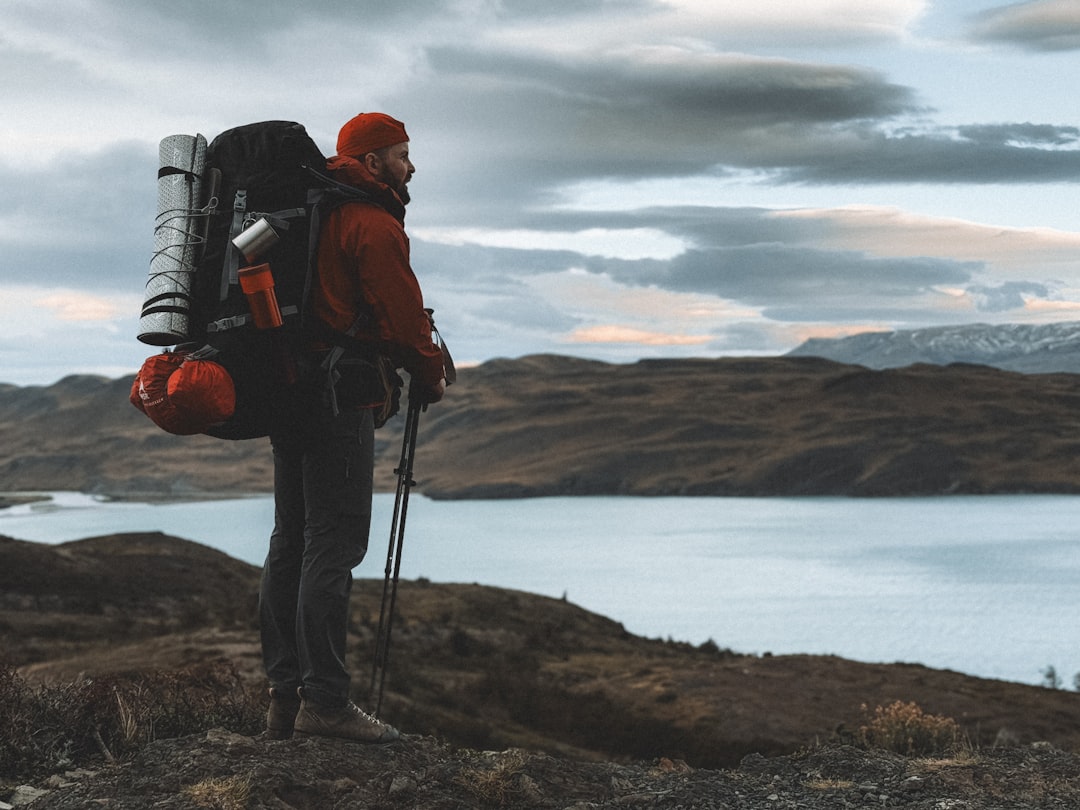
I spent three years ignoring the obvious. Every time I’d get past mile four on a hike, my knees would start screaming. By mile six, I’d be limping down the mountain, swearing I’d take it easy next time. Then I’d forget that promise, hit the trail again, and repeat the cycle. The worst part? I’d watch other hikers, many older than me, cruise past like it was nothing. I finally realized they weren’t superhuman. They were using trekking poles, and I was being stubborn.
What Was Causing the Problem
Here’s what I learned after actually researching this instead of just complaining: hiking downhill puts roughly three to four times your body weight on each knee with every step. I wasn’t weak or out of shape. I was just absorbing all that impact directly through my knees, ankles, and hips. My legs were doing 100% of the work while my upper body checked out. Over hours on a trail, that catches up to you fast. Add uneven terrain, loose rocks, or steep sections, and suddenly my ankles were rolling and my knees were begging for mercy.
How the Trekking Poles with Cork Handles and Wrist Straps Fixes It
I grabbed a pair of these poles before a six-mile hike I’d been dreading. The difference was immediate. Here’s what actually happens when you use them right: the poles transfer about 25% of your body weight away from your legs and into your arms and core. That’s not a gimmick. That’s physics working for you.
The cork handles matter more than I expected. My hands stay dry and comfortable even when I’m sweating, and the cork doesn’t feel cheap or slippery. The wrist straps are genuinely useful too. I was skeptical at first, but they let me relax my grip on descents, which reduces fatigue in my forearms and shoulders by the end of the day. I’m not death-gripping the poles anymore.
On technical terrain, these poles became my third and fourth contact points. Going down rocky sections or crossing streams, I felt more stable. My ankles weren’t twisting because my upper body was helping with balance. On steep climbs, I could actually pull myself upward instead of just pushing.
What Changed After I Started Using It
The first week, my knees stopped hurting at mile five. By week three, I completed a challenging eight-mile loop with minimal discomfort. I’m not pain-free forever, but I’m pain-free during the hike, which means I’m actually enjoying the trail instead of counting down the miles until I can sit down.
I also noticed I’m hiking longer without fatigue hitting as hard. My legs aren’t shot by the end of the day, which means I’m actually recovering between trips instead of nursing sore knees for two days afterward. That’s changed my hiking frequency completely.
Pros and Cons
- Cork handles stay comfortable and dry all day, even on humid or sweaty hikes
- Wrist straps reduce hand and forearm fatigue, especially on long descents
- Measurable impact on knee and joint pain within the first few hikes
- Takes a hike or two to find your rhythm; using them incorrectly defeats the purpose
- Not ideal for very technical scrambling where you need both hands free
My Verdict
I recommend the Trekking Poles with Cork Handles and Wrist Straps because they genuinely work, they’re affordable, and they’ve extended my hiking season. I’m not babying my knees anymore. I’m preventing problems instead of recovering from them. If you’re over 35, dealing with any joint discomfort, or trying to push longer distances, these poles are the move. They’re not optional gear for serious hikers. They’re essential.
Your knees will thank you. I’m grateful mine did.